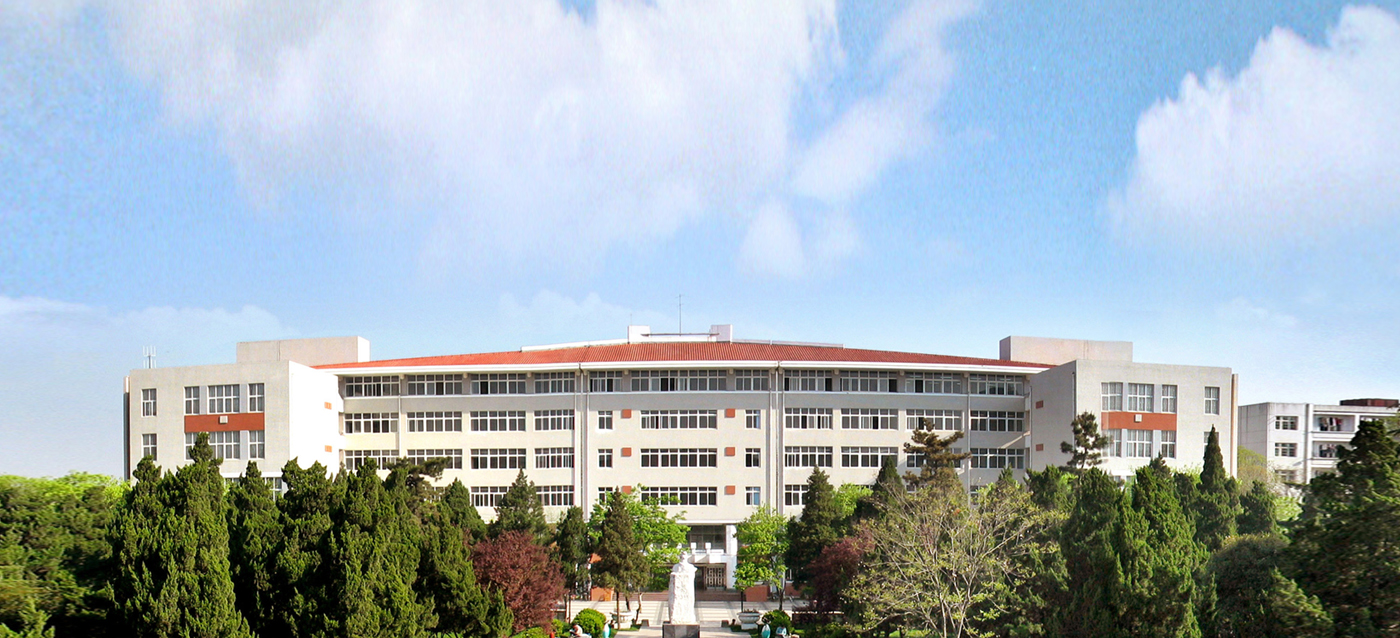


General Information
Anhui Agricultural University is located in Hefei, the capital of Anhui Province. With a long history and profound cultural heritage, it is one of the earliest established institutions of higher learning in Anhui. The university is jointly established by the Anhui Provincial Government, the Ministry of Agriculture and Rural Affairs, and the National Forestry and Grassland Administration. It is also a provincial-level high-level university with distinctive characteristics and a "Double First-Class" cultivation and construction institution.
The university traces its origins back to the Provincial Anhui University founded in 1928 in the then provincial capital, Anqing. It was renamed National Anhui University in 1946 and moved to Wuhu as a complete institution in 1949, where it was renamed Anhui University. In 1954, Anhui University was split into Anhui Teachers College and Anhui Agricultural College. As an independent institution, Anhui Agricultural College moved from Wuhu to Hefei and was renamed Anhui Agricultural University in 1995.
Over the past century, the university has carried forward fine traditions and continued its revolutionary spirit, forging the Anhui Agricultural University spirit of "dedication, innovation, and hard work," refining the school motto of "being down-to-earth," accumulating the school ethos of "unity, diligence, truth-seeking, and innovation," cultivating the teaching ethos of "respect, diligence, and integrity," and nurturing the academic ethos of "erudition, agility, and eloquence." The university has cultivated more than 400,000 "agricultural pioneers and social talents," including over 220,000 undergraduate and graduate students from regular higher education programs.
Currently, the university has 20 colleges (departments) and 29,704 full-time enrolled students (including 206 international students), among whom 7,027 are master’s and doctoral candidates. It employs 2,384 faculty and staff members, including 1,497 full-time teachers (63.7% hold associate professor titles or above). The university has 57 national-level high-level talents and 299 provincial-level high-level talents.
The university currently has 2 disciplines in the top 1‰ of ESI (Essential Science Indicators), 7 disciplines in the top 1%, 1 national key (cultivation) discipline, 19 provincial and ministerial key disciplines, 1 Anhui Province "Double First-Class" cultivation discipline, 4 Anhui Province peak disciplines, and 4 Anhui Province peak cultivation disciplines. It has 7 first-level discipline postdoctoral research stations, 11 first-level discipline doctoral degree authorization points, 27 first-level discipline master’s degree authorization points, 1 second-level discipline master’s degree authorization point, and 19 professional master’s degree authorization categories. The university offers 60 undergraduate majors, including 17 national-level first-class undergraduate major construction sites, 17 provincial-level first-class undergraduate major construction sites, 5 national-level characteristic majors, 2 national-level comprehensive professional reform pilot majors, 2 national-level teaching teams, and 25 national-level first-class courses. In recent years, it has led the way in winning 4 second prizes for national teaching achievement awards.
The university is committed to organized research, having established the National Key Laboratory of Tea Germplasm Innovation and Resource Utilization, the National and Local Joint Engineering Laboratory for Crop Resistance Breeding and Disaster Reduction, and a total of 100 national and provincial-level scientific research platforms. It boasts 1 innovation team from the Ministry of Education and 11 provincial-level "115" industrial innovation teams. Since the start of the 14th Five-Year Plan period, the university has led the way in winning 1 second prize for the National Science and Technology Progress Award, 1 first prize for the National Award for Agricultural, Animal Husbandry, and Fishery Harvest, 1 Anhui Provincial Major Science and Technology Achievement Award, 5 first prizes for Anhui Provincial Science and Technology Progress Awards, and 34 other provincial and ministerial-level awards. It has led the way in receiving 483 national key research and development projects and National Natural Science Foundation projects, including 110 projects funded by the National Natural Science Foundation of China in 2025 and 24 projects funded by the Ministry of Education’s Humanities and Social Sciences Fund. The university has published over 1,200 first-author papers in CAS Zone 1 journals, including 15 in Cell/Nature/Science (CNS) sub-journals, cultivated 35 national-level new varieties and 79 provincial-level new varieties, led the development of 2 international standards, and produced 46 policy consultation reports with affirmative instructions from provincial and ministerial-level leaders.
Committed to strengthening agriculture and serving the country, the university continues to expand the "Dashan Road" of educating people, strengthening agriculture, and fostering collaboration between universities and local governments. It supports the transformation and upgrading of leading and characteristic agricultural industries in over 60% of the province's counties. The university serves as the secretariat for the "1+5" Agricultural Science and Technology Innovation Alliance established by the provincial government and the national agricultural science and technology innovation "national team" and is building a high-quality "Anhui Jianghuai Granary Research Institute." It has proposed and implemented the "Modern Young Farmer Training Program" and developed models such as the "one station, one alliance, one center" for university-county collaboration, the "four-in-one integration" model for new agricultural technology extension, and the industrial poverty alleviation model of "school supporting industry, industry gathering enterprises, enterprises connecting large households, and large households driving small households."
The university adheres to open education, closely cooperating with local governments, prestigious universities, major research institutes, and large enterprises. It has established 8 comprehensive experimental stations, 32 specialized experimental stations (research centers or institutes), and 199 science and technology backyards in collaboration with local governments. It leads the formation of a rural revitalization corporate alliance with 283 leading enterprises and a provincial rural construction university alliance with 58 universities within the province. It has taken the lead in initiatives such as the "100 universities pairing with 100 counties to revitalize 1,000 villages" and the "100 universities, 1,000 towns, and 10,000 villages survey." The university vigorously implements internationalization strategies, establishing stable cooperative relationships with universities and research institutions from over 30 countries and regions. It has been approved as a "Host Institution for Chinese Government Scholarship International Students," a national demonstration base for international scientific and technological cooperation, and a training base for agricultural foreign cooperation under the Ministry of Agriculture and Rural Affairs.
Upholding its mission of serving "Agriculture, Rural Areas and Farmers", AAU has long been dedicated to rejuvenating agriculture and Anhui through science, technology and education. It has successfully opened up a "Dabieshan Road", whose objective is to revitalize education, agriculture, farmers and the University. This nationally renowned "Dabieshan Road" has made prominent contributions to the development of modern agriculture and local economic and social construction. Especially in recent years, AAU has launched the "Modern Young Farmers Project", established "Station-Consortium-Center" mechanism jointly founded by Counties and the University, "Four Integrations" (a new agricultural sci-tech promotion service model), and an industry-level poverty alleviation program in which "the University provides supports to industrial development, industries introduce and foster enterprises, enterprises cooperates with large farmers, and large farmers help low-income households". These undertakings have received wide recognitions from the Party and state leaders, ministries, Anhui Provincial Party Committee and Provincial Government.
AAU, guided by Xi Jinping Thought on Socialism with Chinese Characteristics for a New Era, makes in-depth exploration into the spirit of the 20th CPC National Congress. The University, as always, will take "talent cultivation through moral education" as its fundamental task and duly shoulder the task of "rejuvenating agriculture, rural areas and farmers". It will seize the great opportunities arising from China's rural revitalization strategy and the "Double First-class" Initiative, and strengthen the overall leadership of the Party on the university work. Implementing the deployment requirements of the Anhui Provincial Committee of the CPC and the Anhui Provincial Government regarding the "1+5" Agricultural Science and Technology Innovation Alliance and the construction of the Jianghuai Granary Research Institute, we will remain down-to-earth and strive for first-class performance. We will accelerate the development of a distinctive high-level university that integrates agriculture, industry, and commerce, and endeavor to make new and greater contributions to serving the Beautiful Anhui construction in the process of Chinese modernization.((Data as of May 2026))